
How Tariffs Are Changing the Price of Your Next Work Truck
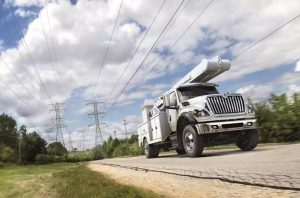
Buying a new work truck just got a lot more expensive. New federal tariffs on imported commercial vehicles and parts are pushing prices higher across every truck class that vocational fleet owners depend on most. The increases are real, they are already in effect, and they are not going away anytime soon.
If you are planning to add or replace trucks in 2026, understanding where these costs come from — and how to plan around them — could save your business tens of thousands of dollars.
What the Section 232 Tariffs Actually Cover
In October 2025, President Trump signed a proclamation under Section 232 of the Trade Expansion Act imposing sweeping new tariffs on commercial vehicles. The measure applies a 25% tariff to all Class 3 through Class 8 medium- and heavy-duty trucks and their parts. That covers everything from the Ram 3500 and Ford F-450 through the largest Class 8 tractors and vocational trucks on the market.
The tariff also hits key components separately. Engines, transmissions, tires, and chassis imported from outside the U.S. all carry the 25% duty. That means even trucks assembled domestically face cost increases if their parts are sourced internationally.
The rule took effect November 1, 2025. Used and remanufactured vehicles built within the last 25 years are also subject to the tariff, which adds pressure to an already tight used truck market.
How Much More Will You Pay?
The numbers are significant. According to the American Trucking Associations, a 25% tariff on imported trucks could raise the price of a new tractor by as much as $35,000. When the 12% federal excise tax is applied on top of the tariff-inflated price, the total cost of a new Class 8 truck could approach $238,000 — up from a recent average of around $170,000.
ACT Research projects that tariffs alone will add approximately $10,000 to new truck prices in 2026. For medium-duty trucks used by service fleets, landscapers, contractors, and utility operators, the impact is proportionally similar. A five-truck purchase that would have cost $500,000 last year could now run $550,000 or more.
Nearly 50% of Class 8 trucks sold in the U.S. are imported from Mexico. Furthermore, 43% of all truck parts come from foreign suppliers. That supply chain dependency means cost increases are hitting across the board — not just on a few specialty models.
Why Small Fleets Feel It Most
Large national fleets have procurement teams, volume discounts, and capital reserves to cushion the blow. Small fleets do not. According to the AtoB 2026 trucking tariff guide, 91.5% of trucking companies in the U.S. operate 10 or fewer trucks. Those businesses lack the financial depth to absorb sudden price swings on equipment.
For a two- or three-truck contractor fleet, a $10,000 to $35,000 per-unit increase can mean the difference between replacing aging equipment on schedule or running trucks well past their optimal service life. Deferred replacements drive up maintenance costs, increase breakdown risk, and hurt driver satisfaction. The ripple effects spread quickly through a small operation.
What About Parts and Maintenance Costs?
The tariff hit does not stop at the purchase price. Because the 25% duty covers imported parts — including engines, transmissions, tires, and chassis components — maintenance and repair costs are climbing too.
Many of the parts your service shop orders every week cross a border before reaching your dealer’s parts counter. Steel and aluminum tariffs compound the issue, raising the cost of fabricated components, body parts, and upfit materials. Together, these increases squeeze the total cost of ownership on every truck in your fleet, not just new purchases.
A Partial Relief: USMCA Content Rules
There is some good news for fleets buying trucks built in North America. In February 2026, the U.S. Department of Commerce published procedures allowing importers of USMCA-eligible vehicles to submit documentation proving U.S. content. When accepted, tariffs apply only to the non-U.S. portion of the vehicle’s value — not the full price.
Additionally, in May 2026, the administration expanded tariff offset rules to medium- and heavy-duty vehicle manufacturers. Eligible U.S. assemblers can apply offsets that reduce duties on imported parts based on their domestic assembly volume. Over time, that could put modest downward pressure on sticker prices from manufacturers with strong domestic production — but the full effect will take time to work through the supply chain.
For fleet buyers, the practical takeaway is straightforward: trucks with the highest U.S. content will carry the lowest tariff exposure. When comparing models and specs, asking your dealer about a truck’s country of origin and domestic content percentage is now a legitimate part of the purchasing conversation.
How to Protect Your Fleet Budget
Tariffs are not going away, but there are concrete steps fleet owners can take to manage their impact.
First, act on near-term needs now. If you have trucks that need replacement in the next 12 to 18 months, evaluate whether buying sooner makes sense. Prices are not expected to fall, and the combined pressure of tariffs and upcoming EPA 2027 emissions costs means the purchase window today may be more favorable than a year from now.
Second, look carefully at U.S.-assembled options. Trucks built with higher domestic content will carry a lower tariff burden. Models assembled in American plants — from manufacturers like Ford, International, and Kenworth — may offer a relative cost advantage compared to imported alternatives.
Third, consider extending high-performing assets strategically. If your trucks are well-maintained and performing reliably, holding them an additional cycle while tariff dynamics settle is a reasonable capital management decision. Pair that strategy with a tighter preventive maintenance schedule to protect uptime.
Finally, talk to your dealer about what is in stock. Pre-tariff inventory still sitting on dealer lots may carry pricing that predates the full tariff impact. Moving on in-stock units, even if the spec is not perfect, could deliver meaningful savings compared to ordering a custom build today.
The Bottom Line
Tariffs have added a new layer of complexity to every fleet purchasing decision in 2026. The cost increases are real, they affect trucks and parts alike, and small fleet owners carry the sharpest exposure.
The fleet owners who fare best this year will be the ones who ask the right questions early — about content, about inventory, about timing — rather than discovering the impact at the closing table.
Also read: Remarketing Work Trucks: When to Sell for Top Dollar

