
Stop Letting Low Tire Pressure Deflate Your Budget
The Invisible Cash Leak under Your Fleet
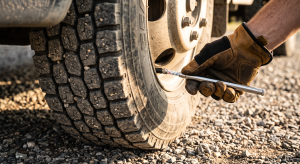
Let us face an annoying truth about running a Class 1 to 6 fleet. You might buy the most efficient trucks on the road. However, if your drivers roll out with soft tires, you are still throwing money away. Indeed, tire care is an easy way to protect your fleet budget. Unfortunately, it is also one of the most ignored tasks in the entire industry. Unless your business plan involves donating cash to your local tire shop, you should probably focus on this simple issue. Many drivers assume a tire is fine just because it looks round. Actually, a tire can lose two pounds of air each month. You will not see any visible signs of a leak. According to researchers at the US EPA, running ten pounds low cuts your gas mileage by one percent.
Why Soft Tires Cost Double
When your tires do not have enough air, they bend much more under heavy loads. Consequently, this extra bending generates heat and increases rolling resistance. As a result, your engines have to work much harder to push the vehicle forward. To make matters worse, that extra heat quickly softens the rubber. This causes your tires to wear out up to ten percent faster than normal. Therefore, you must buy expensive new tires more often. Meanwhile, soft tires are very easy to puncture with sharp objects on the road. This leads to flat tires, dangerous highway blowouts, and highly expensive roadside help calls. Furthermore, if you operate in places like California, you must follow strict rules regarding tire pressure for light-duty fleet vehicles. You can read more about these laws on the US Department of Energy’s Alternative Fuels Data Center.
Simple Actions for Big Returns
You do not need an advanced college degree to fix this costly problem. First, you should buy high-quality tire gauges for every single driver in your fleet. Then, you must train your team to check their tire pressure before every trip. Do not rely on visual checks alone, because your eyes cannot spot a minor drop in pressure. Additionally, you can look into smart Tire Pressure Monitoring Systems, or TPMS. These devices attach to the tire valves and send real-time warnings to the driver’s dashboard. While these systems cost money upfront, they typically pay for themselves in less than two years. In conclusion, keeping your tires properly inflated is the simplest way to boost your bottom line and keep your fleet rolling safely.
Also read: Save Thousands: Essential Tire Maintenance Tips for Fleets

