
Buying vs. Leasing Work Trucks: A Side-by-Side Look
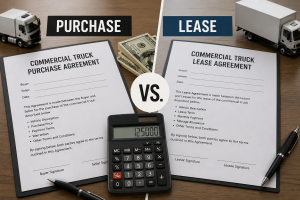
The sticker price on a new work truck or van is just the beginning of the conversation. The more important question is how you pay for it. Buying and leasing each carry different implications for cash flow, taxes, flexibility, and long-term cost. For small and mid-size fleet operators, making the wrong call can drain your operating budget for years.
This side-by-side comparison breaks down the key differences so you can make a clear-headed decision before you walk into a dealership.
Understanding Total Cost of Ownership First
Before diving into financing structures, it helps to anchor the decision in total cost of ownership (TCO). TCO captures the full cost of a vehicle over its life: purchase or lease payments, insurance, fuel, maintenance, repairs, and the vehicle’s eventual resale or residual value. A low monthly payment that comes with high maintenance costs or a poor residual value may actually cost more over five years than a higher payment on a more reliable vehicle.
Both buying and leasing affect TCO differently. Leasing typically produces lower monthly payments because you are only paying for the depreciation during the lease term, not the full vehicle value. Buying requires larger monthly payments but builds equity that can be recovered at resale.
The Case for Buying
When you buy a work truck, you own it outright once it is paid off. That means no more monthly payments, no mileage restrictions, and full freedom to customize or upfit the vehicle however your operation demands. For trades businesses with heavy upfitting needs, ownership is often the more practical path because major upfit investments don’t make sense on a vehicle you will return in three years.
Buying also unlocks significant tax advantages. Under Section 179 of the IRS tax code, businesses can deduct the full purchase price of qualifying commercial vehicles in the year they are placed in service. Work trucks and cargo vans used more than 50 percent for business typically qualify. According to Section179.org, vehicles with a Gross Vehicle Weight Rating (GVWR) over 6,000 pounds and used exclusively for business may qualify for the full Section 179 deduction. In 2025, bonus depreciation was fully restored to 100 percent, allowing businesses to deduct the remaining cost after Section 179 in the same year.
The trade-off is upfront capital. Financing a vehicle purchase ties up credit, requires a down payment, and leaves you holding the depreciation risk if the market moves or the vehicle is damaged.
The Case for Leasing
Leasing preserves capital. Most commercial leases require less money down and carry lower monthly payments than a purchase loan for the same vehicle. That frees up cash for other parts of your business, which matters especially when you are growing or managing seasonal cash flow.
Lease payments are generally deductible as ordinary business expenses. There are no depreciation schedules to manage and no complex IRS calculations. You simply expense each payment in the year it is made. For fleets with many vehicles, this simplicity can be a meaningful accounting advantage.
At the end of a closed-end lease, you return the vehicle and walk away, assuming you stayed within mileage limits and maintained the vehicle properly. That predictability appeals to businesses that want to cycle into new vehicles every few years without the hassle of selling used equipment.
Open-End vs. Closed-End Leases
Not all leases work the same way. Understanding the difference between open-end and closed-end structures is important for commercial fleet operators.
A closed-end lease, sometimes called a walk-away lease, sets a fixed mileage allowance and a predetermined return date. The lessor assumes the depreciation risk. If the vehicle is worth less than expected at lease end, that is the lessor’s problem. This structure suits fleets with predictable, lower-mileage routes.
An open-end lease has no mileage restrictions and offers more flexibility to adjust the fleet size as your business changes. However, the lessee assumes the depreciation risk at the end of the term. If the vehicle sells for less than the agreed residual value, you owe the difference. Open-end leases are the industry standard for heavy-duty commercial trucks and upfitted service vehicles, according to Alliance Fleet Solutions, because heavy use and customization often make closed-end restrictions impractical.
Which Option Fits Your Business?
Buying tends to make more sense when you plan to keep vehicles for five or more years, when your trucks require significant upfitting, or when you want to take advantage of Section 179 and bonus depreciation in a high-income year. It is also the better path if your vehicles accumulate high mileage annually.
Leasing tends to make more sense when you prioritize lower monthly cash outlays, want to cycle into newer vehicles regularly, or manage a fleet where vehicle age and reliability directly impact your brand image. Service companies that operate client-facing vehicles often choose leasing for this reason.
Many experienced fleet operators use both strategies simultaneously. They lease light-duty delivery vans while purchasing and owning heavily upfitted service trucks. The right answer depends on your specific vehicles, your tax situation, and your cash flow priorities. Consulting your accountant before committing to either path is always worth the time.
References
Section 179 – FAQs and Vehicle Deductions: section179.org
WEX – Bonus Depreciation for Fleet Purchases: wexinc.com
Alliance Fleet Solutions – Open vs. Closed-End Lease: alliancefleetsolutions.com
Merchants Fleet – Lease Comparison Guide: merchantsfleet.com
Also read: Fuel Prices Are Back in the Spotlight: What Fleet Operators Should Do Now

