
Darker Drives Ahead: Prep Crews for the Time Change
The Clock Change Hits Fleets Hard
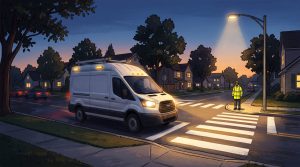
Daylight saving time ends at 2 a.m. on Sunday, Nov. 1. That extra hour of sleep sounds nice. However, the trade-off shows up fast for work truck fleets. The next afternoon, many crews will finish their last job and head home in the dark.
That shift matters more than most managers think. The National Safety Council reports that we do only about one quarter of our driving at night. Yet half of all traffic deaths happen after dark. In other words, the same route home suddenly carries more risk.
Pedestrians Are Harder to See
People on foot face the biggest danger. According to the Governors Highway Safety Association, 76.5% of pedestrian deaths in 2024 happened after dark. That figure only counts cases where the lighting was known.
The same report has a warning for fleets, too. Light trucks, including pickups, vans, and SUVs, struck the pedestrian in 50.4% of those deaths. Passenger cars accounted for 40.6%. So the vehicles most fleets run are the ones most often involved.
Help Drivers See and Be Seen
Start with the trucks themselves. The National Safety Council suggests aiming and cleaning headlights and cleaning the windshield to remove streaks. It also advises dimming dashboard lights. In addition, drivers facing bright oncoming lights should look toward the white line on the right edge of the road.
Next, talk about speed. Headlights only reach so far. As a result, drivers need more time to react to what they see. NHTSA urges drivers to slow down, scan for people everywhere, and take extra care at night. It also reminds drivers to check carefully for pedestrians when backing up.
Watch for Tired and Older Drivers
Darkness also makes fatigue worse. The National Safety Council notes that losing two hours of sleep affects driving like having three beers. For that reason, avoid stacking late jobs on top of early starts. Encourage drivers to take a break about every two hours on long days, too.
Age plays a role as well. The NSC says a 50-year-old driver may need twice as much light as a 30-year-old to see as well. Therefore, encourage yearly eye exams for your veteran drivers. Anti-reflective lenses can also help drivers who wear glasses.
Make It Part of Your Fall Safety Talk
Finally, use the time change as a reminder. Bring it up at your next safety meeting or tailgate talk. Then walk each truck to check its headlights before Nov. 1. A small amount of prep now can help every driver get home safely all winter.
Also read: Winter-Proof Your Fleet to Avoid Expensive Cold Breakdowns

